

About
Introduction
An archive is an extremely potent instrument. In its essence, it recounts the narrative of a people, and in our particular instance, it recounts the tale of African architects. The objective of this archive is not to allow its content to accumulate detritus; rather, it is to document and advance the ways in which Africans are reinventing architectural education and practice through the implementation of a diverse array of reflexive programs.
Consequently, the archive of design and architecture (ada) is not merely a repository of knowledge; it is also a space that actively investigates the work that we produce in Africa and the Diaspora. Lecture series (In Plain Sight), workshops, seminars, short learning programs, podcasts, film documentaries, organised project excursions, and exhibitions are employed to accomplish this.
The architecture industry's limited documentation of black architects is a challenge for ada to address. Humanity has been taught by history that a sustainable and flourishing creative culture and economy are established by enabling diversity, inclusivity, and cross-disciplinary approaches. This is applicable to both architecture schools and practices. What is the reason for the dearth of awareness of black architects and their work? How were they able to devise and construct in a time when it was challenging for them to do so? What was the subject of their design? What has been the effect of this on their methods of design? How can we compile a corpus of knowledge based on the work of black architects? How to guarantee the future of black architectural practices is promising.
ada is a visible and intentional endeavour that requires us to rediscover the lives and work of black architects who have been overlooked in repositories across the continent. The archive's involvement in perpetuating exclusivity and paucity within the industry has been called into question due to the lack of knowledge available on their work. The archive project delves into the themes of rewriting and reflecting on the rich history of black architects in our continent. It proposes key milestones to guarantee the growth and impact of their self-production endeavours, as well as the creation of individual and collective identities through the telling of their stories.
Mission Statement
To enable African architects to unlock their enterprising potential
Meet The Team
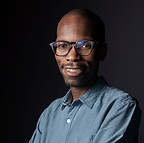
Dr Emmanuel Nkambule

Emmanuel Nkambule is an architect and Associate Professor at the Graduate School of Architecture, University of Johannesburg. His practice, research, and teaching concentrate on the role of architecture in tackling socio-economic and socio-spatial issues in Africa. His work is disseminated in the form of architectural projects, publications, public lecture series, and exhibitions. He has served as a panelist for architectural awards, an external reviewer at various architectural institutions, a curator, and a design-thinker contributing across multiple platforms.

Oratile Mothoagae
Oratile Mothoagae is an interdisciplinary architect based in Zeerust, South Africa. He earned his Master's in Architecture from the University of Johannesburg's Graduate School of Architecture (GSA) in 2018. Following graduation, he began teaching design at GSA, later moving to Tshwane University of Technology (TUT), where he taught design, theory, history, and initiated a seminar series titled Writing the Drawing. In 2021, he co-founded the Archive of Design and Architecture (ada) with Dr Emmanuel Nkambule, aiming to preserve and highlight works of black designers historically excluded from traditional archives. His interdisciplinary practice, SSL Studios, emphasizes reimagining African histories, notably producing the SAFTA-winning documentary Cogito ergo sum about South Africa's first black architect, Aziz Tayob. In 2023, Oratile participated in the first Venice Biennale’s architectural college and contributed to the South African Pavilion. He also managed the University of Pretoria’s architectural archives, focusing on 1970s modernism. Oratile is involved with Business Arts South Africa (BASA) and the Prince Claus Building Beyond programme, further establishing his role as a cultural practitioner.

Letlhogonolo Sesana
Letlhogonolo Sesana, Co-Founder of Sesana-Sesana Studio, holds a Master’s in Architectural Technology from Tshwane University of Technology. An artist, award-winning designer, and researcher, her work explores identity, culture, and architecture—merging performative rituals with design while examining how technological advancements expand the possibilities of ‘making’. As a lecturer at the University of Pretoria, Tshwane University of Technology, and the Graduate School of Architecture (University of Johannesburg), she investigates the role of narratives in architectural production, explores innovative modes of practice, confronts history, and imagines community-driven futures.
Partners and Funding
